Depression Risk Prediction Among Teenagers Using Explainable Machine Learning and Imbalanced Behavioral Data
DOI:
https://doi.org/10.56705/ijaimi.v4i1.436Keywords:
Adolescent Mental Health, Depression Risk Prediction, Explainable Machine Learning, Social Media Usage, Imbalanced Classification, Health InformaticsAbstract
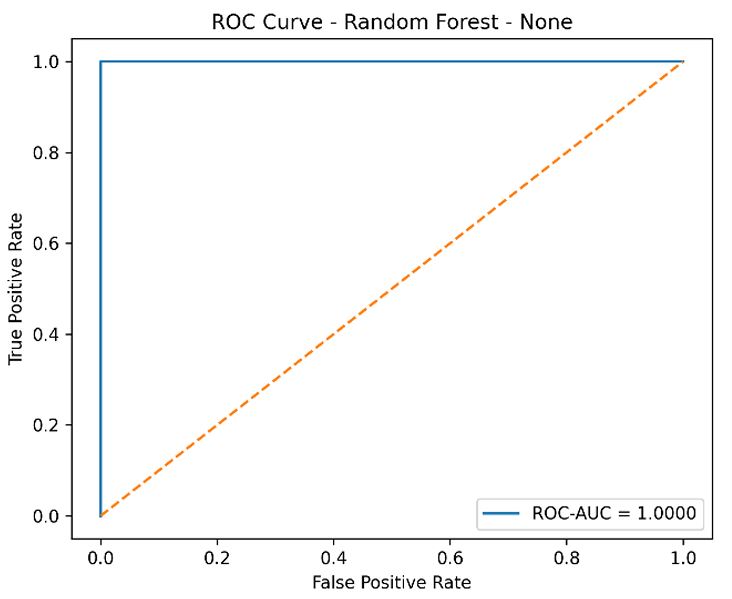
Adolescent depression has become an important public health concern, particularly in relation to increasing digital media exposure, lifestyle changes, and psychosocial pressure. This study proposes an explainable machine learning framework for predicting depression risk among teenagers using social media usage, lifestyle behavior, and psychosocial indicators. The dataset consisted of 1,200 records with 13 variables, including age, gender, daily social media hours, platform usage, sleep hours, screen time before sleep, academic performance, physical activity, social interaction level, stress level, anxiety level, addiction level, and depression label. The target variable was highly imbalanced, with 1,169 samples categorized as non-depression and only 31 samples categorized as depression risk. Several machine learning models were evaluated, including Logistic Regression, Random Forest, Support Vector Machine, and Gradient Boosting. The experiments compared two feature settings, namely behavioral-only features and full features, combined with three imbalance handling strategies: no imbalance treatment, class weighting, and SMOTE. Model performance was evaluated using accuracy, precision, recall, F1-score, balanced accuracy, ROC-AUC, PR-AUC, Cohen’s Kappa, MAE, and RMSE. The results showed that the full-feature setting substantially outperformed the behavioral-only setting. The best performance was achieved by Random Forest using full features without imbalance handling, producing perfect classification results with accuracy, precision, recall, F1-score, ROC-AUC, and PR-AUC of 1.0000. Permutation importance analysis identified sleep hours, stress level, anxiety level, and daily social media hours as the most influential predictors. These findings indicate that teenage depression risk in this dataset is strongly associated with sleep behavior and psychosocial conditions, in addition to social media exposure. Although the model achieved excellent performance, the result should be interpreted cautiously due to the small number of positive depression-risk samples and the possibility of highly separable label patterns. Therefore, the proposed approach should be positioned as an early risk screening framework rather than a clinical diagnostic tool
References
[1] B. Lu, L. Lin, and X. Su, “Global burden of depression or depressive symptoms in children and adolescents: A systematic review and meta-analysis,” J. Affect. Disord., vol. 354, pp. 553–562, Jun. 2024, doi: 10.1016/j.jad.2024.03.074.
[2] N. Saleem, P. Young, and S. Yousuf, “Exploring the Relationship Between Social Media Use and Symptoms of Depression and Anxiety Among Children and Adolescents: A Systematic Narrative Review,” Cyberpsychology Behav. Soc. Netw., vol. 27, no. 11, pp. 771–797, Nov. 2024, doi: 10.1089/cyber.2023.0456.
[3] D. J. Korczak, C. Westwell-Roper, and R. Sassi, “Diagnosis and management of depression in adolescents,” Can. Med. Assoc. J., vol. 195, no. 21, pp. E739–E746, May 2023, doi: 10.1503/cmaj.220966.
[4] N. Agyapong-Opoku, F. Agyapong-Opoku, and A. J. Greenshaw, “Effects of Social Media Use on Youth and Adolescent Mental Health: A Scoping Review of Reviews,” Behav. Sci., vol. 15, no. 5, p. 574, Apr. 2025, doi: 10.3390/bs15050574.
[5] H. Shannon, K. Bush, P. J. Villeneuve, K. G. Hellemans, and S. Guimond, “Problematic Social Media Use in Adolescents and Young Adults: Systematic Review and Meta-analysis,” JMIR Ment. Health, vol. 9, no. 4, p. e33450, Apr. 2022, doi: 10.2196/33450.
[6] Z. Yue and M. Rich, “Social Media and Adolescent Mental Health,” Curr. Pediatr. Rep., vol. 11, no. 4, pp. 157–166, Sep. 2023, doi: 10.1007/s40124-023-00298-z.
[7] D. J. Yu, Y. K. Wing, T. M. H. Li, and N. Y. Chan, “The Impact of Social Media Use on Sleep and Mental Health in Youth: a Scoping Review,” Curr. Psychiatry Rep., vol. 26, no. 3, pp. 104–119, Mar. 2024, doi: 10.1007/s11920-024-01481-9.
[8] J. M. Nagata et al., “Social Media Use and Depressive Symptoms During Early Adolescence,” JAMA Netw. Open, vol. 8, no. 5, p. e2511704, May 2025, doi: 10.1001/jamanetworkopen.2025.11704.
[9] D. Liu, X. L. Feng, F. Ahmed, M. Shahid, and J. Guo, “Detecting and Measuring Depression on Social Media Using a Machine Learning Approach: Systematic Review,” JMIR Ment. Health, vol. 9, no. 3, p. e27244, Mar. 2022, doi: 10.2196/27244.
[10] D. Phiri, F. Makowa, V. L. Amelia, Y. V. A. Phiri, L. P. Dlamini, and M.-H. Chung, “Text-Based Depression Prediction on Social Media Using Machine Learning: Systematic Review and Meta-Analysis,” J. Med. Internet Res., vol. 27, p. e59002, Apr. 2025, doi: 10.2196/59002.
[11] O. Ahmed, E. I. Walsh, A. Dawel, K. Alateeq, D. A. Espinoza Oyarce, and N. Cherbuin, “Social media use, mental health and sleep: A systematic review with meta-analyses,” J. Affect. Disord., vol. 367, pp. 701–712, Dec. 2024, doi: 10.1016/j.jad.2024.08.193.
[12] B. Brosnan, J. J. Haszard, K. A. Meredith-Jones, S.-R. Wickham, B. C. Galland, and R. W. Taylor, “Screen Use at Bedtime and Sleep Duration and Quality Among Youths,” JAMA Pediatr., vol. 178, no. 11, p. 1147, Nov. 2024, doi: 10.1001/jamapediatrics.2024.2914.
[13] W. B. Tahir, S. Khalid, S. Almutairi, M. Abohashrh, S. A. Memon, and J. Khan, “Depression Detection in Social Media: A Comprehensive Review of Machine Learning and Deep Learning Techniques,” IEEE Access, vol. 13, pp. 12789–12818, 2025, doi: 10.1109/ACCESS.2025.3530862.
[14] L. As. Brautsch, L. Lund, M. M. Andersen, P. J. Jennum, A. P. Folker, and S. Andersen, “Digital media use and sleep in late adolescence and young adulthood: A systematic review,” Sleep Med. Rev., vol. 68, p. 101742, Apr. 2023, doi: 10.1016/j.smrv.2022.101742.
[15] U. M. Haque, E. Kabir, and R. Khanam, “Detection of child depression using machine learning methods,” PLOS ONE, vol. 16, no. 12, p. e0261131, Dec. 2021, doi: 10.1371/journal.pone.0261131.
[16] A. Yoo et al., “Prediction of adolescent depression from prenatal and childhood data from ALSPAC using machine learning,” Sci. Rep., vol. 14, no. 1, p. 23282, Oct. 2024, doi: 10.1038/s41598-024-72158-9.
[17] M. T. Hawes, H. A. Schwartz, Y. Son, and D. N. Klein, “Predicting adolescent depression and anxiety from multi-wave longitudinal data using machine learning,” Psychol. Med., vol. 53, no. 13, pp. 6205–6211, Oct. 2023, doi: 10.1017/S0033291722003452.
[18] X. Liu et al., “Identification of depressive symptoms in adolescents using machine learning combining childhood and adolescence features,” BMC Public Health, vol. 25, no. 1, p. 264, Jan. 2025, doi: 10.1186/s12889-025-21506-z.
[19] Md. S. Zulfiker, N. Kabir, A. A. Biswas, T. Nazneen, and M. S. Uddin, “An in-depth analysis of machine learning approaches to predict depression,” Curr. Res. Behav. Sci., vol. 2, p. 100044, Nov. 2021, doi: 10.1016/j.crbeha.2021.100044.
[20] Y. Xin et al., “Machine learning-based analysis and prediction of factors influencing mental health among children and adolescents in Jiangsu Province,” Child Adolesc. Psychiatry Ment. Health, vol. 19, no. 1, p. 100, Aug. 2025, doi: 10.1186/s13034-025-00959-5.