The Performance of Support Vector Machine in Classifying Public Sentiment toward Student Suicide Cases
DOI:
https://doi.org/10.56705/ijodas.v7i2.431Keywords:
Sentiment Analysis, Support Vector Machine, YouTube Comments, Text MiningAbstract
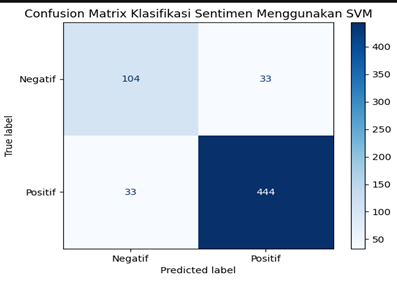
Introduction: The rapid growth of social media has generated large volumes of user-generated content that can be analyzed to understand public responses to sensitive social issues. This study evaluates the performance of Support Vector Machine (SVM) in classifying public sentiment toward a widely discussed student suicide case based on YouTube comments. Method: A total of 5,000 comments were collected from a video on the Denny Sumargo YouTube channel using the YouTube Data API and categorized into positive and negative sentiments. Text preprocessing included cleaning, normalization, tokenization, stop-word removal, and stemming. Term Frequency-Inverse Document Frequency (TF-IDF) was used for feature extraction, while Synthetic Minority Over-sampling Technique (SMOTE) addressed class imbalance. The dataset was divided into 80% training and 20% testing data, and SVM was applied for binary sentiment classification. Results and Discussion: The SVM model achieved 99.96% training accuracy and 89.25% test accuracy, with precision, recall, and F1-score consistently around 89%. These results indicate that the TF-IDF, SMOTE, and SVM pipeline effectively classified Indonesian social media comments despite the linguistic complexity of discussions surrounding sensitive issues. Conclusion: SVM demonstrates effective and robust performance for classifying public sentiment in Indonesian YouTube comments and provides a useful approach for analyzing public responses to sensitive social phenomena.
Downloads
References
[1] A. M. Putra, Candra Saputra, Rahmaddeni, Safril Irsandi, and Vawana Muzaki, “Analisis Sentimen Masyarakat Terhadap Kasus Gas LPG 3 Kg Pada Youtube Kompas Menggunakan Metode Support Vector Machine,” Explore, vol. 15, no. 2, pp. 163–171, Jul. 2025, doi: https://doi.org/10.35200/ex.v15i2.159.
[2] D. Marganingsih, H. Oktavianto, and G. Abdurrahman, “Analisis Sentimen Komentar Youtube Masterchef Indonesia Menggunakan Algoritma Support Vector Machine dan Gaussian Naïve Bayes,” Jurnal Informatika dan Teknologi Pendidikan, vol. 5, no. 1, May 2025, doi: https://doi.org/10.59395/jitp.v5i1.117.
[3] M. R. Kana, N. Rahmi, and M. Mulkal, “Penggunaan Machine Learning Algoritma Support Vector Machine (SVM) Untuk Mengidentifikasi Kadar Pasir Besi di Kabupaten Aceh Besar,” Jurnal Pertambangan dan Lingkungan, vol. 5, no. 1, p. 36, Jul. 2024, doi: https://doi.org/10.31764/jpl.v5i1.23216.
[4] R. R. G. D. M. S. Desti Mualfah1), “Analisis Sentimen Komentar YouTube TvOne Tentang Ustadz Abdul Somad Dideportasi Dari Singapura Menggunakan Algoritma SVM,” Apr. 2023.
[5] D. Atmajaya, A. Febrianti, H. Darwis, I. Artikel Abstrak, and K. Kunci, “Metode SVM dan Naive Bayes untuk Analisis Sentimen ChatGPT di Twitter,” Indonesian Journal of Computer Science Attribution, vol. 12, no. 4, p. 2173, Aug. 2023.
[6] H. Herlawati, R. T. Handayanto, P. D. Atika, F. N. Khasanah, A. Y. P. Yusuf, and D. Y. Septia, “Analisis Sentimen Pada Situs Google Review dengan Naïve Bayes dan Support Vector Machine,” Jurnal Komtika (Komputasi dan Informatika), vol. 5, no. 2, pp. 153–163, Nov. 2021, doi: https://doi.org/10.31603/komtika.v5i2.6280.
[7] V. Fitriyana et al., “Analisis Sentimen Ulasan Aplikasi Jamsostek Mobile Menggunakan Metode Support Vector Machine,” Apr. 2023.
[8] N. Hendrastuty, A. Rahman Isnain, and A. Yanti Rahmadhani, “Analisis Sentimen Masyarakat Terhadap Program Kartu Prakerja Pada Twitter Dengan Metode Support Vector Machine,” vol. 6, no. 3, 2021.
[9] Andika Mahesa putra, Candra Saputra, Rahmaddeni, Safril Irsandi, and Vawana Muzaki, “Analisis Sentimen Masyarakat Terhadap Kasus Gas LPG 3 Kg Pada Youtube Kompas Menggunakan Metode Support Vector Machine,” Explore, vol. 15, no. 2, pp. 163–171, Jul. 2025, doi: https://doi.org/10.35200/ex.v15i2.159.
[10] B. Savita and D. D. Gore, “Sentiment Analysis on Twitter Data Using Support Vector Machine,” International Journal of Computer Science Trends and Technology, vol. 4.
[11] F. Putrawansyah, “Penerapan Metode Support Vector Machine Terhadap Klasifikasi Jenis Jambu Biji,” JIKO (Jurnal Informatika dan Komputer), vol. 8, no. 1, p. 193, Feb. 2024, doi: https://doi.org/10.26798/jiko.v8i1.988.
[12] Ade Dwi Dayani, Yuhandri, and G. Widi Nurcahyo, “Analisis Sentimen Terhadap Opini Publik pada Sosial Media Twitter Menggunakan Metode Support Vector Machine,” Jurnal KomtekInfo, pp. 1–10, Mar. 2024, doi: https://doi.org/10.35134/komtekinfo.v11i1.439.
[13] Chely Aulia Misrun, E. Haerani, M. Fikry, and E. Budianita, “Analisis sentimen komentar youtube terhadap Anies Baswedan sebagai bakal calon presiden 2024 menggunakan metode naive bayes classifier,” Jurnal CoSciTech (Computer Science and Information Technology), vol. 4, no. 1, pp. 207–215, Apr. 2023, doi: https://doi.org/10.37859/coscitech.v4i1.4790.
Downloads
Published
Issue
Section
License
Copyright (c) 2026 I Gusi Gede Bagus Ngurah Sarjana, Made Leo Radhitya, Ni Wayan Suardiati Putri

This work is licensed under a Creative Commons Attribution-NonCommercial 4.0 International License.
Authors retain copyright and full publishing rights to their articles. Upon acceptance, authors grant Indonesian Journal of Data and Science a non-exclusive license to publish the work and to identify itself as the original publisher.
Self-archiving. Authors may deposit the submitted version, accepted manuscript, and version of record in institutional or subject repositories, with citation to the published article and a link to the version of record on the journal website.
Commercial permissions. Uses intended for commercial advantage or monetary compensation are not permitted under CC BY-NC 4.0. For permissions, contact the editorial office at ijodas.journal@gmail.com.
Legacy notice. Some earlier PDFs may display “Copyright © [Journal Name]” or only a CC BY-NC logo without the full license text. To ensure clarity, the authors maintain copyright, and all articles are distributed under CC BY-NC 4.0. Where any discrepancy exists, this policy and the article landing-page license statement prevail.