Sentiment Analysis of Student Comments on Facilities and Infrastructure at Instiki Using Retrieval Augmented Generation
DOI:
https://doi.org/10.56705/ijodas.v6i3.377Keywords:
Sentiment Analysis, Facilities and Infrastructure, Retrieval Augmented Generation (RAG), Lexicon-Based, Student CommentsAbstract
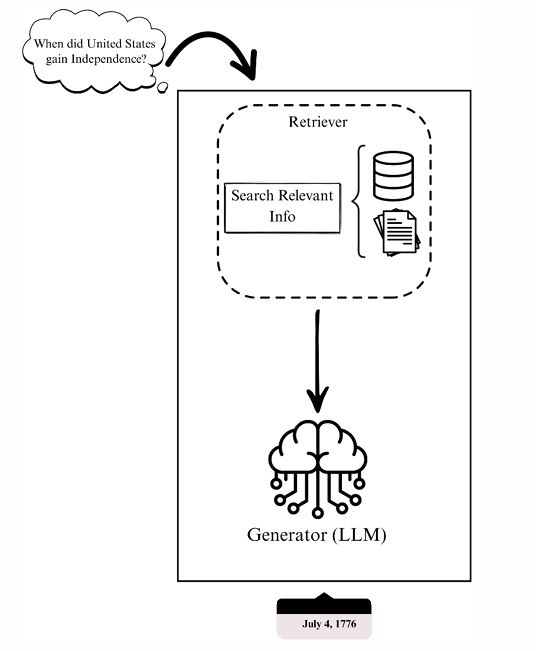
This research was conducted to analyze the sentiment of student comments on infrastructure facilities at the Indonesian Institute of Business and Technology (INSTIKI) to overcome the problem of comment analysis that was previously done manually. The data used is in the form of student comments in 2024. The method used in this study is Retrieval Augmented Generation (RAG) with data labeling using Lexicon-Based. The test was carried out on three Large Language Models (LLMs), namely indobenchmark/indobert-base-p1, TinyLlama/TinyLlama-1.1B-Chat-v1.0, and w11wo/indonesian-roberta-base-sentiment-classifier. The test results showed that the indobenchmark/indobert-base-p1 model produced the highest accuracy of 80% in both test sessions compared to other models. The TinyLlama/TinyLlama-1.1B-Chat-v1.0 model produced 60% accuracy in session 1 and 65% in session 2, while the w11wo/indonesian-roberta-base-sentiment-classifier model produced 60% accuracy in both test sessions. The difference in the performance of these three LLMs shows that the model's understanding of Indonesian can affect the results of sentiment predictions.
Downloads
References
[1] S. Yahya, M. Aditya Domili, D. Sartika Tahir, M. Wahid, S. Basri, and B. Mandiri, “The Effect of Teaching Quality and Campus Facilities on Student Learning Motivation,” Eastasouth J. Learn. Educ., vol. 1, no. 02, pp. 36–43, Jul. 2023, doi: 10.58812/ESLE.V1I02.100.
[2] S. Nayma et al., “The Effect of Campus Facilities Quality and Technology Support on Student Satisfaction,” J. Akuntansi, Manajemen, dan Perenc. Kebijak., vol. 2, no. 3, pp. 1–11, Jan. 2025, doi: 10.47134/JAMPK.V2I3.586.
[3] N. Farawahida Abdullah and N. Haizum Abd Rahman, “Consumer Acceptance and Perceptions of Electric Vehicles in Malaysia Using Sentiment Analysis,” J. Qual. Meas. Anal. JQMA, vol. 21, no. 2, pp. 41–51, 2025, doi: 10.17576/jqma.2102.2025.04.
[4] D. A. Kristiyanti and S. Hardani, “Sentiment Analysis of Public Acceptance of Covid-19 Vaccines Types in Indonesia using Naïve Bayes, Support Vector Machine, and Long Short-Term Memory (LSTM),” J. RESTI (Rekayasa Sist. dan Teknol. Informasi), vol. 7, no. 3, pp. 722–732, Jun. 2023, doi: 10.29207/RESTI.V7I3.4737.
[5] A. Erkan and T. Gungor, “Analysis of Deep Learning Model Combinations and Tokenization Approaches in Sentiment Classification,” IEEE Access, vol. 11, pp. 134951–134968, 2023, doi: 10.1109/ACCESS.2023.3337354.
[6] M. Rodríguez-Ibánez, A. Casánez-Ventura, F. Castejón-Mateos, and P. M. Cuenca-Jiménez, “A review on sentiment analysis from social media platforms,” Expert Syst. Appl., vol. 223, p. 119862, Aug. 2023, doi: 10.1016/J.ESWA.2023.119862.
[7] G. Patil and V. Chaplot, Natural Language Processing in Real-World Systems. SK Research Group of Companies, 2025.
[8] A. Neustein, P. N. . Mahalle, P. Joshi, and G. R. Shinde, AI, IoT, big data and cloud computing for Industry 4.0. Springer, 2023.
[9] G. Xiong, Q. Jin, Z. Lu, and A. Zhang, “Benchmarking Retrieval-Augmented Generation for Medicine,” Proc. Annu. Meet. Assoc. Comput. Linguist., pp. 6233–6251, 2024, doi: 10.18653/V1/2024.FINDINGS-ACL.372.
[10] V. Singh, V. K. Asari, S. Kumar, and R. B. Patel, Computational Methods and Data Engineering: Proceedings of ICMDE 2020, Volume 1. Springer Nature, 2020.
[11] K. L. Tan, C. P. Lee, K. M. Lim, K. L. Tan, C. P. Lee, and K. M. Lim, “A Survey of Sentiment Analysis: Approaches, Datasets, and Future Research,” Appl. Sci. 2023, Vol. 13, vol. 13, no. 7, Apr. 2023, doi: 10.3390/APP13074550.
[12] J. Zizka, F. Darena, and A. Svoboda, Text mining with machine learning : principles and techniques. CRC Press, 2020.
[13] M. Isnan, G. N. Elwirehardja, and B. Pardamean, “Sentiment Analysis for TikTok Review Using VADER Sentiment and SVM Model,” Procedia Comput. Sci., vol. 227, pp. 168–175, Jan. 2023, doi: 10.1016/J.PROCS.2023.10.514.
[14] K. Mahasivabhattu, Ultimate Machine Learning With ml.net : Build, Optimize, and Deploy Powerful Machine Learning Models for Data-Driven Insights with ML.NET, A. Orange Education Pvt. Ltd, 2024.
[15] M. Yousef and A. ALali, “Analysis and Evaluation of Two Feature Selection Algorithms in Improving the Performance of the Sentiment Analysis Model of Arabic Tweets,” Int. J. Adv. Comput. Sci. Appl., vol. 13, no. 6, pp. 705–711, Jun. 2022, doi: 10.14569/IJACSA.2022.0130683.
[16] H. T. Duong and T. A. Nguyen-Thi, “A review: preprocessing techniques and data augmentation for sentiment analysis,” Comput. Soc. Networks 2020 81, vol. 8, no. 1, pp. 1-, Jan. 2021, doi: 10.1186/S40649-020-00080-X.
[17] N. Umar, M. A. Nur, T. Informatika, and H. Makassar, “Application of Naïve Bayes Algorithm Variations On Indonesian General Analysis Dataset for Sentiment Analysis,” J. RESTI (Rekayasa Sist. dan Teknol. Informasi), vol. 6, no. 4, pp. 585–590, Aug. 2022, doi: 10.29207/RESTI.V6I4.4179.
[18] P. J. K. Singh, MASTERING RETRIEVAL-AUGMENTED GENERATION. BPB PUBLICATIONS, 2025.
[19] D.-S. Huang, H. Chen, B. Li, and Q. Zhang, Advanced Intelligent Computing Technology and Applications 21st International Conference, ICIC 2025, Ningbo, China, July 26-29, 2025, Proceedings, Part X. Springer, 2025.
[20] Food and Agriculture Organization off the United Nations, Farm Data Management, Sharing and Services for Agriculture Development. FAO, 2021.
Downloads
Published
Issue
Section
License
Copyright (c) 2025 Ni Putu Juliana Dewi, I Kadek Dwi Gandika Supartha, I Putu Yoga Indrawan, Ketut Jaya Atmaja

This work is licensed under a Creative Commons Attribution-NonCommercial 4.0 International License.
Authors retain copyright and full publishing rights to their articles. Upon acceptance, authors grant Indonesian Journal of Data and Science a non-exclusive license to publish the work and to identify itself as the original publisher.
Self-archiving. Authors may deposit the submitted version, accepted manuscript, and version of record in institutional or subject repositories, with citation to the published article and a link to the version of record on the journal website.
Commercial permissions. Uses intended for commercial advantage or monetary compensation are not permitted under CC BY-NC 4.0. For permissions, contact the editorial office at ijodas.journal@gmail.com.
Legacy notice. Some earlier PDFs may display “Copyright © [Journal Name]” or only a CC BY-NC logo without the full license text. To ensure clarity, the authors maintain copyright, and all articles are distributed under CC BY-NC 4.0. Where any discrepancy exists, this policy and the article landing-page license statement prevail.