Sentiment Classification and Influential Actor Detection on Twitter (Case Study: The Raja Ampat Mining Conflict)
DOI:
https://doi.org/10.56705/ijodas.v7i1.376Keywords:
Sentiment Analysis, Social Network Analysis, SVM, KNN, Naive Bayes, Nickel Mining, Raja Ampat, TwitterAbstract
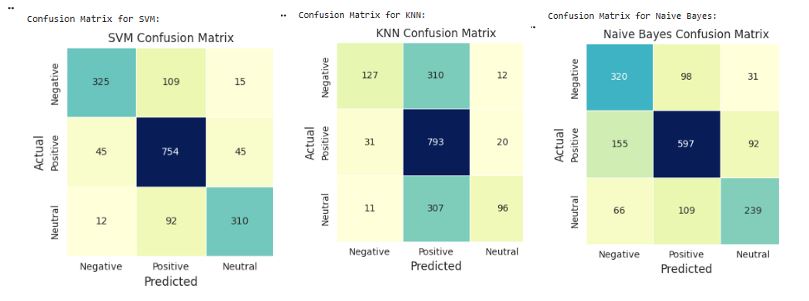
The nickel mining conflict in Raja Ampat has attracted extensive public attention due to the region’s global ecological significance and the potential environmental risks posed by extractive activities. Social media platforms, particularly Twitter, have become important spaces for public discussion and opinion exchange regarding this issue. This study aims to analyze public sentiment and identify influential actors in online discussions of the Raja Ampat mining conflict by integrating sentiment analysis and Social Network Analysis (SNA). This study adopts a cross-sectional design using Indonesian-language tweets collected between 15-27 November 2025. A total of 11,671 tweets were obtained through keyword-based crawling, and after preprocessing and duplicate removal, 8,909 tweets were retained for analysis. Sentiment labeling was performed using a lexicon-based approach, categorizing tweets into positive, neutral, and negative classes. The dataset was divided using an 80:20 train–test split. Sentiment classification was conducted using Support Vector Machine (SVM), K-Nearest Neighbor (KNN), and Naive Bayes algorithms. Model performance was evaluated using confusion matrix–based metrics, including accuracy, precision, recall, and F1-score. Social Network Analysis was carried out by constructing a directed interaction network based on mentions, replies, and retweets, with influential actors identified using degree and betweenness centrality measures. The results indicate that neutral sentiment dominates the discourse (51.58%), followed by negative and positive sentiments. SVM and Naive Bayes demonstrate more stable classification performance than KNN, while network analysis shows that influence is concentrated among a limited number of central actors
Downloads
References
[1] Y. Qi and Z. Shabrina, “Sentiment analysis using Twitter data: a comparative application of lexicon- and machine-learning-based approach,” Soc. Netw. Anal. Min. 2023 131, vol. 13, no. 1, pp. 31-, Feb. 2023, doi: 10.1007/S13278-023-01030-X.
[2] B. Pang and L. Lee, “Opinion Mining and Sentiment Analysis,” Found. Trends® Inf. Retr., vol. 2, no. 1–2, pp. 1–135, 2008, doi: 10.1561/1500000011.
[3] L. C. Freeman, “Centrality in social networks conceptual clarification,” Soc. Networks, vol. 1, no. 3, pp. 215–239, 1978, doi: 10.1016/0378-8733(78)90021-7.
[4] A. Sharma and S. Dey, “A comparative study of selection and machine learning techniques for sentiment analysis,” Proceeding 2012 ACM Res. Appl. Comput. Symp. RACS 2012, pp. 1–7, 2012, doi: 10.1145/2401603.2401605.
[5] B. Saberi and S. Saad, “Sentiment analysis or opinion mining: A review,” Int. J. Adv. Sci. Eng. Inf. Technol., vol. 7, no. 5, pp. 1660–1666, 2017, doi: 10.18517/ijaseit.7.5.2137.
[6] S. Peng, G. Wang, and D. Xie, “Social Influence Analysis in Social Networking Big Data: Opportunities and Challenges,” IEEE Netw., vol. 31, no. 1, pp. 11–17, Jan. 2017, doi: 10.1109/MNET.2016.1500104NM.
[7] N. Parveen, P. Chakrabarti, B. T. Hung, and A. Shaik, “Twitter sentiment analysis using hybrid gated attention recurrent network,” J. Big Data 2023 101, vol. 10, no. 1, pp. 50-, Apr. 2023, doi: 10.1186/S40537-023-00726-3.
[8] N. Öztürk and S. Ayvaz, “Sentiment analysis on Twitter: A text mining approach to the Syrian refugee crisis,” Telemat. Informatics, vol. 35, no. 1, pp. 136–147, Apr. 2018, doi: 10.1016/J.TELE.2017.10.006.
[9] B. Dahal, S. A. P. Kumar, and Z. Li, “Topic modeling and sentiment analysis of global climate change tweets,” Soc. Netw. Anal. Min., vol. 9, no. 1, pp. 1–20, 2019, doi: 10.1007/s13278-019-0568-8.
[10] S. F. Fattah and Purnawansyah, “Analisis sentimen terhadap Body Shaming pada Twitter menggunakan Metode Naïve Bayes Classifier,” Indones. J. Data Sci., vol. 3, no. 2, pp. 61–71, 2022, doi: 10.56705/ijodas.v3i2.46.
[11] B. K. Bhavitha, A. P. Rodrigues, and N. N. Chiplunkar, “Comparative study of machine learning techniques in sentimental analysis,” Proc. Int. Conf. Inven. Commun. Comput. Technol. ICICCT 2017, no. Icicct, pp. 216–221, 2017, doi: 10.1109/ICICCT.2017.7975191.
[12] A. Wahbeh, T. Nasralah, M. Al-Ramahi, and O. El-Gayar, “Mining Physicians’ Opinions on Social Media to Obtain Insights Into COVID-19: Mixed Methods Analysis.,” JMIR public Heal. Surveill., vol. 6, no. 2, p. e19276, Jun. 2020, doi: 10.2196/19276.
[13] J. Hartmann, J. Huppertz, C. Schamp, and M. Heitmann, “Comparing automated text classification methods,” Int. J. Res. Mark., vol. 36, no. 1, pp. 20–38, Mar. 2019, doi: 10.1016/J.IJRESMAR.2018.09.009.
[14] J. D. M. Rennie, L. Shih, J. Teevan, and D. R. Karger, “Tackling the Poor Assumptions of Naive Bayes Text Classifiers,” no. 1973, 2003.
[15] E. Cambria, B. Schuller, Y. Xia, and C. Havasi, “New avenues in opinion mining and sentiment analysis,” 2013.
[16] G. Wang, J. Sun, J. Ma, K. Xu, and J. Gu, “Sentiment classification: The contribution of ensemble learning,” Decis. Support Syst., vol. 57, no. 1, pp. 77–93, Jan. 2014, doi: 10.1016/J.DSS.2013.08.002.
[17] U. Aditiawarman, M. Lumbia, T. Mantoro, and A. A. Ibrahim, “Social Network Analysis: Identification of Communication and Information Dissemination (Case Study of Holywings),” J. Online Inform., vol. 8, no. 1, pp. 19–26, 2023, doi: 10.15575/join.v8i1.911.
[18] U. D. Gandhi, P. Malarvizhi Kumar, G. Chandra Babu, and G. Karthick, “Sentiment Analysis on Twitter Data by Using Convolutional Neural Network (CNN) and Long Short Term Memory (LSTM),” Wirel. Pers. Commun. 2021, pp. 1–10, May 2021, doi: 10.1007/S11277-021-08580-3.
[19] M. Rodríguez-Ibánez, A. Casánez-Ventura, F. Castejón-Mateos, and P. M. Cuenca-Jiménez, “A review on sentiment analysis from social media platforms,” Expert Syst. Appl., vol. 223, p. 119862, Aug. 2023, doi: 10.1016/J.ESWA.2023.119862.
[20] A. R. Sembiring and C. K. Dewa, “Sentiment Analysis On Indonesian Tweets about the 2024 Election,” Sinkron, vol. 9, no. 1, pp. 413–422, 2025, doi: 10.33395/sinkron.v9i1.14481.
[21] A. Giachanou, “Like It or Not : A Survey of Twi er Sentiment Analysis Methods Open Access Support provided by : Like It or Not : A Survey of Twitter Sentiment Analysis Methods,” vol. 49, no. 2, 2026, doi: 10.1145/2938640.
[22] J. Samuel, G. G. M. N. Ali, M. M. Rahman, E. Esawi, and Y. Samuel, “COVID-19 Public Sentiment Insights and Machine Learning for Tweets Classification,” Inf. 2020, Vol. 11, Page 314, vol. 11, no. 6, p. 314, Jun. 2020, doi: 10.3390/INFO11060314.
[23] S. P. Borgatti, “Centrality and network flow,” Soc. Networks, vol. 27, pp. 55–71, 2005, doi: 10.1016/j.socnet.2004.11.008.
[24] D. Chicco and G. Jurman, “The advantages of the Matthews correlation coefficient ( MCC ) over F1 score and accuracy in binary classification evaluation,” pp. 1–13, 2020.
[25] U. Brandes, “A faster algorithm for betweenness centrality,” J. Math. Sociol., vol. 25, no. 2, pp. 163–177, 2001, doi: 10.1080/0022250X.2001.9990249;WEBSITE:WEBSITE:TFOPB;PAGEGROUP:STRING:PUBLICATION.
[26] U. Brandes, “On Variants of Shortest-Path Betweenness Centrality and their Generic Computation 1,” vol. 30, no. November 2007, pp. 136–145, 2008.
[27] I. Technology, F. S. Nufus, W. Gata, C. Science, and U. N. Mandiri, “Sentiment Analysis of Public Opinion on Transportation,” vol. 22, no. 2, pp. 426–432, 2025.
[28] E. Zarrabeitia-Bilbao, M. Jaca-Madariaga, R. M. Rio-Belver, and I. Álvarez-Meaza, “Nuclear energy: Twitter data mining for social listening analysis,” Soc. Netw. Anal. Min., vol. 13, no. 1, pp. 1–17, 2023, doi: 10.1007/s13278-023-01033-8.
[29] A. Khan et al., “Predicting Politician’s Supporters’ Network on Twitter Using Social Network Analysis and Semantic Analysis,” Sci. Program., vol. 2020, 2020, doi: 10.1155/2020/9353120.
[30] J. Jagdale, R. Sreemathy, B. Jagdale, and K. Ghag, “Mapreduce framework based sentiment analysis of twitter data using hierarchical attention network with chronological leader algorithm,” Soc. Netw. Anal. Min. 2024 141, vol. 14, no. 1, pp. 172-, Aug. 2024, doi: 10.1007/S13278-024-01293-Y.
[31] A. P. Logan, P. M. LaCasse, and B. J. Lunday, “Social network analysis of Twitter interactions: a directed multilayer network approach,” Soc. Netw. Anal. Min. 2023 131, vol. 13, no. 1, pp. 65-, Apr. 2023, doi: 10.1007/S13278-023-01063-2.
Downloads
Published
Issue
Section
License
Copyright (c) 2026 Micguel Arter Imbiri, Lorna Yertas Baisa, Josua Josen A. Limbong

This work is licensed under a Creative Commons Attribution-NonCommercial 4.0 International License.
Authors retain copyright and full publishing rights to their articles. Upon acceptance, authors grant Indonesian Journal of Data and Science a non-exclusive license to publish the work and to identify itself as the original publisher.
Self-archiving. Authors may deposit the submitted version, accepted manuscript, and version of record in institutional or subject repositories, with citation to the published article and a link to the version of record on the journal website.
Commercial permissions. Uses intended for commercial advantage or monetary compensation are not permitted under CC BY-NC 4.0. For permissions, contact the editorial office at ijodas.journal@gmail.com.
Legacy notice. Some earlier PDFs may display “Copyright © [Journal Name]” or only a CC BY-NC logo without the full license text. To ensure clarity, the authors maintain copyright, and all articles are distributed under CC BY-NC 4.0. Where any discrepancy exists, this policy and the article landing-page license statement prevail.