Transfer Learning with VGG-16 for Image Classification of Endemic Papuan Orchids
DOI:
https://doi.org/10.56705/ijodas.v6i3.355Keywords:
Papuan endemic orchids, Classification, Convolutional Neural Network (CNN), Transfer Learning, VGG16Abstract
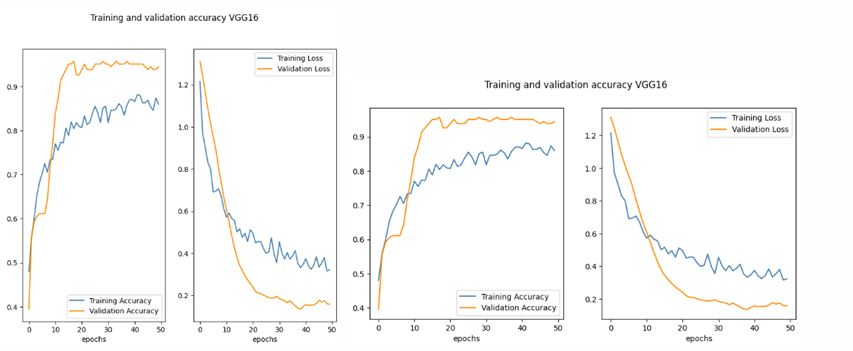
This study applies a transfer-learning approach using the VGG16 architecture to classify three Papuan endemic orchid species—Dendrobium spectabile, Dendrobium lineale, and Dendrobium mirbelianum. A total of 810 field-photographed images were collected, followed by preprocessing and data augmentation to enhance data diversity. The VGG16 model pretrained on ImageNet was used as a fixed feature extractor by freezing its convolutional layers and removing the fully connected layers, while a custom classification head was added to distinguish among the three species. Experimental results demonstrated a validation accuracy of 94.44% and a macro-average F1-score of 0.94, confirming the robustness of the model under limited-data conditions. These findings suggest that transfer learning using VGG16 can effectively support orchid species recognition and serve as a foundation for developing AI-based biodiversity monitoring and conservation systems in Indonesia
Downloads
References
[1] Z. Al Sahili and M. Awad, “The Power of Transfer Learning in Agricultural Applications: AgriNet,” Front. Plant Sci., vol. 13, Jul. 2022, doi: 10.3389/fpls.2022.992700.
[2] N. Coelho, S. Gonçalves, and A. Romano, “Endemic plant species conservation: Biotechnological approaches,” Plants, vol. 9, no. 3, p. 345, 2020, doi: 10.3390/plants9030345.
[3] K. Pammai, M. H. I. Al Muhdhar, M. S. Sari, Sueb, and W. L. Yuhanna, “Inventory of orchid diversity in Merauke District, South Papua Province, Indonesia,” Biodiversitas J. Biol. Divers., vol. 23, no. 11, pp. 5962–5972, Dec. 2022, doi: 10.13057/BIODIV/D231150.
[4] Y. Jiang and C. Li, “Convolutional Neural Networks for Image-Based High-Throughput Plant Phenotyping: A Review,” Plant Phenomics, vol. 2020, p. 4152816, Jan. 2020, doi: 10.34133/2020/4152816.
[5] L. Jia, H. Zhai, X. Yuan, Y. Jiang, and J. Ding, “A parallel convolution and decision fusion-based flower classification method,” Mathematics, vol. 10, no. 15, p. 2767, 2022, doi: 10.3390/math10152767.
[6] J. Lu, L. Tan, and H. Jiang, “Review on convolutional neural network (CNN) applied to plant leaf disease classification,” Agriculture, vol. 11, no. 8, p. 707, 2021, doi: 10.3390/agriculture11080707.
[7] M. A. Kiflie, D. P. Sharma, and M. A. Haile, “Deep learning for Ethiopian indigenous medicinal plant species identification and classification,” J. Ayurveda Integr. Med., vol. 15, no. 6, p. 100987, 2024, doi: 10.1016/j.jaim.2024.100987.
[8] J. Peng, Y. Su, X. Xue, J. Gupta, S. Pathak, and G. Kumar, “Deep Learning (CNN) and Transfer Learning: A Review,” J. Phys. Conf. Ser., vol. 2273, no. 1, p. 12029, 2022, doi: 10.1088/1742-6596/2273/1/012029.
[9] A. Hosna et al., “Transfer learning: A friendly introduction,” Journal of Big Data, vol. 9, no. 1, pp. 1–19, 2022, doi: 10.1186/s40537-022-00652-w.
[10] D. Hindarto, “Comparison Accuracy of CNN and VGG16 in Forest Fire Identification: A Case Study,” J. Comput. Networks, Archit. High Perform. Comput., vol. 6, no. 1, pp. 137–148, Dec. 2024, doi: 10.47709/CNAHPC.V6I1.3371.
[11] A. S. Paymode and V. B. Malode, “Transfer Learning for Multi-Crop Leaf Disease Image Classification using Convolutional Neural Network VGG,” Artif. Intell. Agric., vol. 6, pp. 23–33, 2022, doi: 10.1016/j.aiia.2021.12.002.
[12] A. Abdalla et al., “Fine-tuning convolutional neural network with transfer learning for semantic segmentation of ground-level oilseed rape images in a field with high weed pressure,” Comput. Electron. Agric., vol. 167, p. 105091, Dec. 2019, doi: 10.1016/J.COMPAG.2019.105091.
[13] J. Liang, G. Liang, Y. Zhao, and Y. Zhang, “A synergic method of Sentinel-1 and Sentinel-2 images for retrieving soil moisture content in agricultural regions,” Comput. Electron. Agric., vol. 190, p. 106485, Nov. 2021, doi: 10.1016/J.COMPAG.2021.106485.
[14] E. C. Too, L. Yujian, S. Njuki, and L. Yingchun, “A comparative study of fine-tuning deep learning models for plant disease identification,” Comput. Electron. Agric., vol. 161, pp. 272–279, Jun. 2019, doi: 10.1016/J.COMPAG.2018.03.032.
[15] W. Andrew, J. Gao, S. Mullan, N. Campbell, A. W. Dowsey, and T. Burghardt, “Visual identification of individual Holstein-Friesian cattle via deep metric learning,” Comput. Electron. Agric., vol. 185, p. 106133, 2021, doi: 10.1016/j.compag.2021.106133.
[16] M. Tan and Q. V. Le, “EfficientNetV2: Smaller Models and Faster Training,” Proc. Mach. Learn. Res., vol. 139, pp. 10096–10106, Apr. 2021, Accessed: Oct. 16, 2025. [Online]. Available: https://arxiv.org/pdf/2104.00298.
[17] A. Fuchs, C. Knoll, and F. Pernkopf, “Distribution mismatch correction for improved robustness in deep neural networks,” arXiv preprint arXiv:2110.01955, 2021.
[18] J. Xu, “Comparing multi-class classifier performance by multi-class ROC analysis: A nonparametric approach,” Neurocomputing, vol. 583, p. 127520, May 2024, doi: 10.1016/J.NEUCOM.2024.127520.
[19] J. Wang and H. Wang, “Efficiency in orchid species classification: A transfer learning-based approach,” Journal of Natural Computing, vol. 23, no. 1, 2023, doi: 10.1142/S1469026823500311.
[20] J. Yue et al., “Method for accurate multi-growth-stage estimation of fractional vegetation cover using unmanned aerial vehicle remote sensing,” Plant Methods, vol. 17, no. 1, pp. 1–16, 2021, doi: 10.1186/s13007-021-00752-3.
[21] V. Ayumi et al., “Transfer learning for medicinal plant leaves recognition: A comparison with and without a fine-tuning strategy,” International Journal of Advanced Computer Science and Applications, vol. 13, no. 9, pp. 1–7, 2022.
[22] P. Benz, C. Zhang, A. Karjauv, and I. S. Kweon, “Revisiting batch normalization for improving corruption robustness,” arXiv preprint arXiv:2102.03190, 2021.
[23] M. S. Anand, K. Swaroopa, M. Nainwal, and M. Therasa, “An intelligent flower classification framework: Optimal hybrid flower pattern extractor with adaptive dynamic ensemble transfer learning-based convolutional neural network,” Imaging Sci. J., vol. 72, no. 1, pp. 52–75, 2024, doi: 10.1080/13682199.2023.2183317.
[24] B. Bharadwaj, A. Mishra, and S. Bharadwaj, “Transfer Learning-Based CNN Models for Plant Species Identification Using Leaf Venation Patterns,” Sep. 2025, Accessed: Oct. 17, 2025. [Online]. Available: https://arxiv.org/pdf/2509.03729
[25] D. H. Apriyanti, L. J. Spreeuwers, and P. J. F. Lucas, “Deep neural networks for explainable feature extraction in orchid identification,” Appl. Intell., vol. 53, no. 21, pp. 26270–26285, 2023, doi: 10.1007/s10489-023-04880-2.
[26] W. Shafik et al., “Using transfer learning-based plant disease classification and detection for sustainable agriculture,” BMC Plant Biology, vol. 24, no. 1, pp. 1–19, 2024, doi: 10.1186/s12870-024-04825-y.
[27] K. A. Sahib, B. K. Oleiwi, and A. R. Nasser, “Medicinal Plants Recognition Using Deep Transfer Learning Models,” Int. J. Des. & Nat. Ecodynamics, vol. 19, no. 5, pp. 1501–1510, 2024, doi: 10.18280/ijdne.190504.
[28] S. Orouji, M. C. Liu, T. Korem, and M. A. K. Peters, “Domain adaptation in small-scale and heterogeneous biological datasets,” May 2024, Accessed: Oct. 17, 2025. [Online]. Available: https://arxiv.org/pdf/2405.19221
Downloads
Published
Issue
Section
License
Copyright (c) 2025 Iftinan Mardhiyyah, Christian D. Suhendra, Agustina Y. S. Arobaya

This work is licensed under a Creative Commons Attribution-NonCommercial 4.0 International License.
Authors retain copyright and full publishing rights to their articles. Upon acceptance, authors grant Indonesian Journal of Data and Science a non-exclusive license to publish the work and to identify itself as the original publisher.
Self-archiving. Authors may deposit the submitted version, accepted manuscript, and version of record in institutional or subject repositories, with citation to the published article and a link to the version of record on the journal website.
Commercial permissions. Uses intended for commercial advantage or monetary compensation are not permitted under CC BY-NC 4.0. For permissions, contact the editorial office at ijodas.journal@gmail.com.
Legacy notice. Some earlier PDFs may display “Copyright © [Journal Name]” or only a CC BY-NC logo without the full license text. To ensure clarity, the authors maintain copyright, and all articles are distributed under CC BY-NC 4.0. Where any discrepancy exists, this policy and the article landing-page license statement prevail.