Sentiment Analysis of Public Opinion on Pi Network on Reddit Using FinBERT
DOI:
https://doi.org/10.56705/ijodas.v6i3.342Keywords:
FinBERT, Sentiment Analysis, Reddit, Cryptocurrency, Pi NetworkAbstract
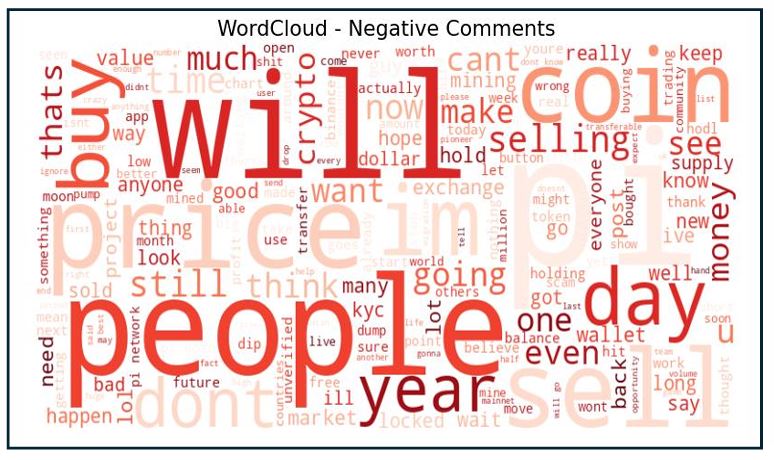
The rapid growth of blockchain technology has led to the emergence of new cryptocurrencies, including Pi Network, which emphasizes accessibility through mobile-based mining. This study aims to answer the research question of whether FinBERT, a financial domain-specific transformer model, can effectively classify public sentiment in informal Reddit discussions related to Pi Network. FinBERT was first evaluated on a labeled financial sentiment dataset to assess its performance in a structured financial context before being applied to Reddit data. Model performance was measured using accuracy, precision, recall, and F1-score. After validation, the model was used to analyze one thousand twenty Reddit comments discussing Pi Network. Text preprocessing included cleaning, case folding, tokenization, stopword removal, stemming, and sequence standardization. The evaluation results show that FinBERT achieved an accuracy of eighty-five point ninety-eight percent on the financial validation dataset, with strong precision and recall across sentiment classes. When applied to Reddit comments, neutral sentiment was the most dominant, followed by positive and negative sentiments. Pi Network was selected as the case study because, unlike more established cryptocurrencies, it is still in an early stage of development and relies heavily on community participation, making public opinion particularly important for understanding its adoption and credibility
Downloads
References
[2] A. H. Huang, H. Wang, and Y. Yang, “FinBERT: A large language model for extracting information from financial text,” Contemporary Accounting Research, vol. 40, no. 2, pp. 806–841, May 2023, doi: 10.1111/19113846.12832.
[3] Y. Yang, M. C. S. Uy, and A. Huang, “FinBERT: A pretrained language model for financial communications,” arXiv preprint, arXiv:2006.08097, Jul. 2020.
[4] E. Mnif, A. Jarboui, and K. Mouakhar, “How the cryptocurrency market has performed during COVID-19? A multifractal analysis,” Finance Research Letters, vol. 36, Oct. 2020, doi: 10.1016/j.frl.2020.101647.
[5] S. A. Dauda, I. Y. Aliyu, and J. Ibrahim, “Social media and cryptocurrency adoption: A study of Pi Network adoption among Nigerian FinTech entrepreneurs,” 2021.
[6] Y. Shen and P. K. Zhang, “Financial sentiment analysis on news and reports using large language models and FinBERT,” 2022.
[7] Z. Hasan, W. Wiryadi, A. Fadhulrrahman, M. Dimas, and R. D. A. Jabbar, “Regulasi penggunaan teknologi blockchain dan mata uang kripto sebagai tantangan di masa depan dalam hukum siber,” Birokrasi: Jurnal Ilmu Hukum dan Tata Negara, vol. 2, no. 2, pp. 55–69, May 2024, doi: 10.55606/birokrasi.v2i2.1163.
[8] R. Zhang, R. Xue, and L. Liu, “Security and privacy for healthcare blockchains,” IEEE Transactions on Services Computing, vol. 15, no. 6, pp. 3668–3686, Nov. 2022, doi: 10.1109/TSC.2021.3085913.
[9] R. Issalh, A. Gupta, and M. Gupta, “Pi Network: A revolution,” Scientific Journal of Metaverse and Blockchain Technologies, vol. 1, no. 1, pp. 18–27, Dec. 2023, doi: 10.36676/sjmbt.v1i1.03.
[10] S. Kumar, P. P. Roy, D. P. Dogra, and B.-G. Kim, “A comprehensive review on sentiment analysis: Tasks, approaches and applications,” arXiv preprint, arXiv:2311.11250, Nov. 2023.
[11] M. Cary, “Herding and investor sentiment after the cryptocurrency crash: Evidence from Twitter and natural language processing,” Financial Innovation, vol. 10, no. 63, 2024, doi: 10.1186/s40854-024-00663-x.
[12] “Wisdom of the crowd signals: Predictive power of social media trading signals for cryptocurrencies,” Electronic Markets, 2025, doi: 10.1007/s12525-025-00815-6.
[13] “Explaining cryptocurrency price trends: Statistical analysis of social media posts vs market prices,” in Proceedings of the Web Conference 2024, ACM, pp. 1–10, 2024, doi: 10.1145/3654823.3654866.
[14] Y. Tang, Y. Yang, A. H. Huang, A. Tam, and J. Z. Tang, “FinEntity: Entity-level sentiment classification for financial texts,” arXiv preprint, arXiv:2310.12406, 2023.
[15] Z. Han, C. Gao, J. Liu, J. Zhang, and S. Q. Zhang, “Parameter-efficient fine-tuning for large models: A comprehensive survey,” arXiv preprint, arXiv:2403.14608, Mar. 2024.
[16] “Constructing and analyzing domain-specific language model for financial text mining,” Information Processing & Management, vol. 60, no. 2, pp. 103–120, 2023, doi: 10.1016/j.ipm.2022.103120.
[17] “Innovative sentiment analysis and prediction of stock price using FinBERT, GPT-4 and logistic regression: A data-driven approach,” AI, vol. 8, no. 11, p. 143, 2024, doi: 10.3390/ai8110143.
[18] N. Anggraini, D. A. Prasetya, et al., “Prediksi harga saham sektor energi menggunakan metode spatial temporal attention-based convolutional network berdasarkan data teks dan numerik,” 2025.
[19] S. Sathyanarayanan, “Confusion matrix-based performance evaluation metrics,” African Journal of Biomedical Research, vol. 27, no. 4s, pp. 4023–4031, Nov. 2024, doi: 10.53555/ajbr.v27i4s.4345.
[20] T. Jamaluddin, M. A. Bijaksana, and I. Asror, “Perbandingan algoritma SentencePiece BPE dan Unigram pada tokenisasi artikel Bahasa Indonesia,” 2020.
[21] T. M. Fahrudin et al., “Analisis speech-to-text pada video mengandung kata kasar dan ujaran kebencian menggunakan interpretasi audiens dan visualisasi word cloud,” SKANIKA: Sistem Komputer dan Teknik Informatika, vol. 5, no. 2, pp. 190–202, 2022.
[22] M. Saputra and S. Wahyuni, “Analisis sentimen pengguna pada aplikasi bank digital KROM dengan algoritma support vector machine,” INFOTECH Journal, vol. 10, no. 2, pp. 327–332, Nov. 2024, doi: 10.31949/infotech.v10i2.11801.
[23] A. Sinaga and S. P. Nainggolan, “Analisis perbandingan akurasi dan waktu proses algoritma stemming Arifin-Setiono dan Nazief-Adriani pada dokumen teks Bahasa Indonesia,” Sebatik, vol. 27, no. 1, pp. 63–69, Jun. 2023, doi: 10.46984/sebatik.v27i1.2072.
[24] Febby Wilyani, Q. N. Arif, and F. Aslimar, “Pengenalan dasar pemrograman Python dengan Google Colaboratory,” Jurnal Pelayanan dan Pengabdian Masyarakat Indonesia, vol. 3, no. 1, pp. 8–14, Mar. 2024, doi: 10.55606/jppmi.v3i1.1087.
[25] Bambang Arianto, “JSPG: Journal of Social Politics and Governance,” Journal of Social Politics and Governance, 2020.
Downloads
Published
Issue
Section
License
Copyright (c) 2025 Sindy Indira Wiguna, Adhitia Erfina, Cecep Warman

This work is licensed under a Creative Commons Attribution-NonCommercial 4.0 International License.
Authors retain copyright and full publishing rights to their articles. Upon acceptance, authors grant Indonesian Journal of Data and Science a non-exclusive license to publish the work and to identify itself as the original publisher.
Self-archiving. Authors may deposit the submitted version, accepted manuscript, and version of record in institutional or subject repositories, with citation to the published article and a link to the version of record on the journal website.
Commercial permissions. Uses intended for commercial advantage or monetary compensation are not permitted under CC BY-NC 4.0. For permissions, contact the editorial office at ijodas.journal@gmail.com.
Legacy notice. Some earlier PDFs may display “Copyright © [Journal Name]” or only a CC BY-NC logo without the full license text. To ensure clarity, the authors maintain copyright, and all articles are distributed under CC BY-NC 4.0. Where any discrepancy exists, this policy and the article landing-page license statement prevail.