Classification Of Organic And Inorganic Waste Using Resnet50
DOI:
https://doi.org/10.56705/ijodas.v6i2.267Keywords:
Deep Learning, Image Augmentation, ResNet50, Sustainable Environment, Transfer Learning, Waste ClassificationAbstract
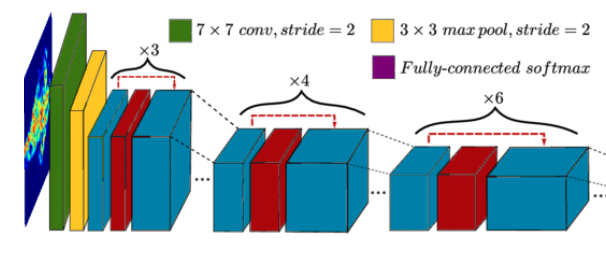
Waste generation, particularly from organic and inorganic sources, has become a growing environmental issue, especially in culturally unique regions like Bali where traditional offerings contribute to organic waste volumes. Despite regulations such as Gianyar Regency Regulation No. 76 of 2023 mandating source-level separation, on-ground implementation remains inconsistent due to low public awareness and operational limitations. This study addresses the challenge by developing an automated image-based classification system using the ResNet50 deep learning architecture to distinguish between organic and inorganic waste. A total of 200 images were collected 100 per class using smartphone cameras, and the dataset was expanded to 1,400 images through geometric data augmentation techniques such as rotation, flipping, and zooming. Images were resized to 224x224 pixels and evaluated using K-Fold Cross Validation to ensure model stability. The model was trained using transfer learning and tested under two conditions with and without augmentation while optimizing hyperparameters such as learning rates (0.0001 and 0.00001) and optimizers (Adam and SGD). The results demonstrate that augmentation significantly enhanced model performance, with the augmented model achieving an average accuracy of 99.25%, precision of 99.32%, recall of 99.25%, and F1-score of 99.25%, compared to 89.88% accuracy in the non-augmented model. These findings confirm that ResNet50, when combined with geometric augmentation and proper preprocessing, offers a robust, accurate, and scalable solution for waste classification tasks. This research contributes to the advancement of AI-driven environmental technologies and offers a potential framework for smart waste management systems, with future directions including real-time deployment, multi-class classification, and expansion to more diverse and real-world datasets.
Downloads
References
A. A. Gour and S. K. Singh, “Solid Waste Management in India: A State-of-the-Art Review,” Environ. Eng. Res., 2022, doi: 10.4491/eer.2022.249.
S. Syafrudin and M. Maryono, “CASE STUDY Characterization and quantification of solid waste in rural regions,” 2022, doi: 10.22034/gjesm.2023.02.12.
C. S. Balachandran and U. Rajasekaram, “Solid Waste Management Approaches in Trincomalee Urban Council Area,” Vidyodaya J. Humanit. Soc. Sci., 2020, doi: 10.31357/fhss/vjhss.v05i01.03.
M. Jain and A. K. Pal, “Organic Waste Management,” Soc. Sci. Res. Netw., 2020, doi: 10.2139/ssrn.3560032.
R. Kothari et al., “Valorization of bio-waste material: future dimensions for path towards sustainability,” Environ. Sustain., vol. 4, pp. 199–200, 2021, doi: 10.1007/s42398-021-00191-9.
G. Nasarani, H. Purnaweni, M. Maryono, and N. Surahman, “The governance of Household Hazardous Waste (HHW): A literature review of HHW-related regulation in Southeast Asian developing countries,” IOP Conf. Ser. Earth Environ. Sci., vol. 1314, 2024, doi: 10.1088/1755-1315/1314/1/012124.
C. Frazzoli, F. Ruggieri, B. Battistini, O. E. Orisakwe, J. K. Igbo, and B. Bocca, “E-WASTE threatens health: The scientific solution adopts the one health strategy.,” Environ. Res., p. 113227, 2022, doi: 10.1016/j.envres.2022.113227.
D. Guo, Q. Yang, Y. Zhang, T. Jiang, and H.-B. Yan, “Classification of Domestic Refuse in Medical Institutions Based on Transfer Learning and Convolutional Neural Network,” C. Model. Eng. & Sci., vol. 127, pp. 599–620, 2021, doi: 10.32604/CMES.2021.014119.
W.-L. Mao, W.-C. Chen, C.-T. Wang, and Y.-H. Lin, “Recycling waste classification using optimized convolutional neural network,” Resour. Conserv. Recycl., vol. 164, p. 105132, 2021, doi: 10.1016/j.resconrec.2020.105132.
R. Thinakaran, J. Somasekar, V. Neerugatti, and P. G. Saran, “Automated Waste Classification using Convolutional Neural Network,” 2024 14th Int. Conf. Softw. Technol. Eng., pp. 169–173, 2024, doi: 10.1109/ICSTE63875.2024.00037.
F. W. Mubarokhh, “Image Classification of Organic and Inorganic Waste Using Convolutional Neural Networks,” IC-ITECHS, 2024, doi: 10.32664/ic-itechs.v5i1.1632.
Y. Rayhan and A. P. Rifai, “Multi-class Waste Classification Using Convolutional Neural Network,” Appl. Environ. Res., 2024, doi: 10.35762/aer.2024021.
J. Kaur, S. Rani, and G. Singh, “Yoga Pose Classification Using ResNet-50 and Random Forest: A Hybrid Deep Learning Approach,” 2024 Int. Conf. Innov. Nov. Eng. Technol., vol. I, pp. 1–6, 2024, doi: 10.1109/INNOVA63080.2024.10846992.
Susanti, Mustakim, R. Novita, and I. Permana, “Application of Residual Network Architecture on Covid-19 Chest x-ray Classification,” 2022 Int. Symp. Inf. Technol. Digit. Innov., pp. 121–125, 2022, doi: 10.1109/ISITDI55734.2022.9944525.
K. Gencer, G. Gencer, and I. H. Cizmeci, “Deep Learning Approaches for Retinal Image Classification: A Comparative Study of GoogLeNet and ResNet Architectures,” Int. Sci. Vocat. Stud. J., 2024, doi: 10.47897/bilmes.1523768.
K. Kaur, R. Dhir, and K. Kumar, “Transfer Learning approach for analysis of epochs on Handwritten Digit Classification,” 2021 2nd Int. Conf. Secur. Cyber Comput. Commun., pp. 456–458, 2021, doi: 10.1109/ICSCCC51823.2021.9478102.
P. W. Kariuki, P. K. Gikunda, and J. M. Wandeto, “Deep Transfer Learning Optimization Techniques for Medical Image Classification: A Review,” 2022 Int. Conf. Intell. Comput. Mach. Learn., pp. 7–15, 2023, doi: 10.1109/2ICML58251.2022.00013.
Z. Zhang, J. Hou, and Z. Lin, “Exploring Integration methods for Image Data Augmentation,” 2024 6th Int. Conf. Internet Things, Autom. Artif. Intell., pp. 707–713, 2024, doi: 10.1109/IoTAAI62601.2024.10692583.
Y. Fu, X. Li, and Y. Ye, “A multi-task learning model with adversarial data augmentation for classification of fine-grained images,” Neurocomputing, vol. 377, pp. 122–129, 2020, doi: 10.1016/j.neucom.2019.10.002.
Y. Wang, C. Deng, and F. Zuo, “Random augmentation pipe for hyperspectral image classification with few samples,” Int. J. Remote Sens., vol. 43, pp. 6581–6604, 2022, doi: 10.1080/01431161.2022.2132123.
O. Fedoruk, K. Klimaszewski, A. Ogonowski, and R. Mo.zd.zonek, “Performance of GAN-based augmentation for deep learning COVID-19 image classification,” ArXiv, vol. abs/2304.0, 2023, doi: 10.1063/5.0203379.
B. A. Albert, “Deep Learning From Limited Training Data: Novel Segmentation and Ensemble Algorithms Applied to Automatic Melanoma Diagnosis,” IEEE Access, vol. 8, pp. 31254–31269, 2020, doi: 10.1109/ACCESS.2020.2973188.
J. M. Górriz, F. Segovia, J. Ramirez, A. Ortíz, and J. Suckling, “Is K-fold cross validation the best model selection method for Machine Learning?,” ArXiv, vol. abs/2401.1, 2024, doi: 10.48550/arXiv.2401.16407.
V. Lumumba, D. Kiprotich, M. Mpaine, N. Makena, and M. Kavita, “Comparative Analysis of Cross-Validation Techniques: LOOCV, K-folds Cross-Validation, and Repeated K-folds Cross-Validation in Machine Learning Models,” Am. J. Theor. Appl. Stat., 2024, doi: 10.11648/j.ajtas.20241305.13.
Z. Lin, J. Lai, X. Chen, L. Cao, and J. Wang, “Curriculum Reinforcement Learning Based on K-Fold Cross Validation,” Entropy, vol. 24, 2022, doi: 10.3390/e24121787.
S. Gajula, “Performance Analysis of Classification and Detection of Brain Tumor MRI Images Using Resnet50 Deep Residual U-Net,” J. Iran. Med. Counc., 2023, doi: 10.18502/jimc.v6i1.11848.
Y. Liu, W. Wang, and W. He, “A Study on an Improved ResNet Model for Image Classification,” 2024 17th Int. Congr. Image Signal Process. Biomed. Eng. Informatics, pp. 1–6, 2024, doi: 10.1109/CISP-BMEI64163.2024.10906260.
G. Singh, K. Guleria, and S. Sharma, “Advanced Fruit Sorting: Pre-trained ResNet50 Model for Rotten and Fresh Fruit Classification,” 2024 4th Asian Conf. Innov. Technol., pp. 1–5, 2024, doi: 10.1109/ASIANCON62057.2024.10837782.
R. Y. Patil, S. S. Gulavani, V. B. Waghmare, and I. K. Mujawar, “Image based anthracnose and red-rust leaf disease detection using deep learning,” 2022, doi: 10.12928/telkomnika.v20i6.24262.
Y. Liang, H. Ren, Z. Wan, and R. Zhou, “Research on Art Classification Based on the Improved Resnet50 Network,” Theor. Nat. Sci., 2024, doi: 10.54254/2753-8818/52/2024ch0133.
S. Deshnande, R. K. Patel, S. S. Chouhan, and H. Vishwakarma, “Transfer Learning with ResNet50 for Enhanced Mammographic Breast Cancer Identification,” 2024 5th Int. Conf. Circuits, Control. Commun. Comput., pp. 58–63, 2024, doi: 10.1109/I4C62240.2024.10748454.
L.-E. Pommé, R. Bourqui, R. Giot, and D. Auber, “Relative Confusion Matrix: Efficient Comparison of Decision Models,” 2022 26th Int. Conf. Inf. Vis., pp. 98–103, 2022, doi: 10.1109/IV56949.2022.00025.
Downloads
Published
Issue
Section
License
Copyright (c) 2025 I Kadek Mahesa Chandra Qinantha, I Gusti Agung Indrawan, I Putu Satria Udyana Putra, I Gusti Ayu Agung Mas Aristamy, Ayu Gede Willdahlia

This work is licensed under a Creative Commons Attribution-NonCommercial 4.0 International License.
Authors retain copyright and full publishing rights to their articles. Upon acceptance, authors grant Indonesian Journal of Data and Science a non-exclusive license to publish the work and to identify itself as the original publisher.
Self-archiving. Authors may deposit the submitted version, accepted manuscript, and version of record in institutional or subject repositories, with citation to the published article and a link to the version of record on the journal website.
Commercial permissions. Uses intended for commercial advantage or monetary compensation are not permitted under CC BY-NC 4.0. For permissions, contact the editorial office at ijodas.journal@gmail.com.
Legacy notice. Some earlier PDFs may display “Copyright © [Journal Name]” or only a CC BY-NC logo without the full license text. To ensure clarity, the authors maintain copyright, and all articles are distributed under CC BY-NC 4.0. Where any discrepancy exists, this policy and the article landing-page license statement prevail.