Evaluating the Performance of Voting Classifier in Multiclass Classification of Dry Bean Varieties
DOI:
https://doi.org/10.56705/ijodas.v5i1.124Keywords:
Voting Classifier, Dry Bean Classification, Machine Learning, Agricultural Informatics, Ensemble LearningAbstract
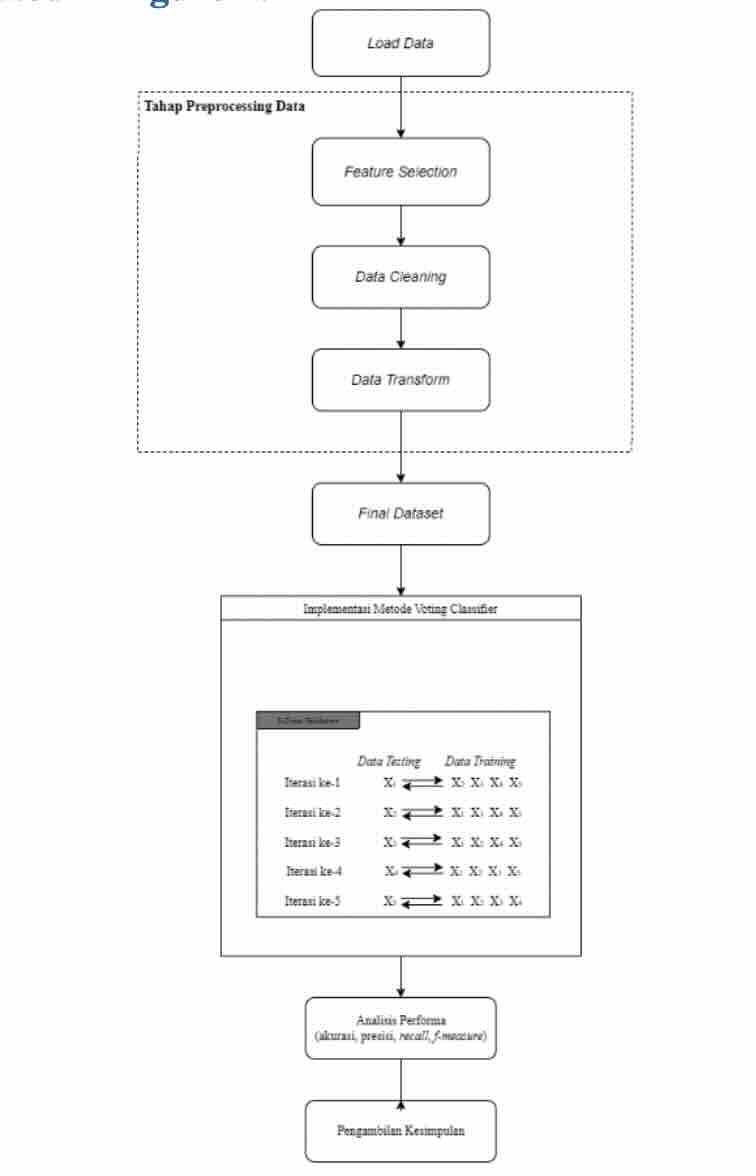
This study explores the application of a voting classifier, integrating Decision Tree, Logistic Regression, and Gaussian Naive Bayes models, for the multiclass classification of dry bean varieties. Utilizing a dataset comprising 13,611 images of dry bean grains, captured through a high-resolution computer vision system, we extracted 16 features to train and test the classifier. Through a rigorous 5-fold cross-validation process, we assessed the model's performance, focusing on accuracy, precision, recall, and F1-score metrics. The results demonstrated significant variability in the classifier's performance across different data subsets, with accuracy rates fluctuating between 31.23% and 96.73%. This variability highlights the classifier's potential under specific conditions while also indicating areas for improvement. The research contributes to the agricultural informatics field by showcasing the effectiveness and challenges of using ensemble learning methods for crop variety classification, a crucial task for enhancing agricultural productivity and food security. Recommendations for future research include exploring additional features to improve model generalization, extending the dataset for broader applicability, and comparing the voting classifier's performance with other ensemble methods or advanced machine learning models. This study underscores the importance of machine learning in advancing agricultural classification tasks, paving the way for more efficient and accurate crop sorting and grading processes.
Downloads
References
M. A. Febriantono, “Classification of multiclass imbalanced data using cost-sensitive decision tree c5.0,” IAES Int. J. Artif. Intell., vol. 9, no. 1, pp. 65–72, 2020, doi: 10.11591/ijai.v9.i1.pp65-72.
R. Panneerselvam, “Multi-Class Skin Cancer Classification Using a Hybrid Dynamic Salp Swarm Algorithm and Weighted Extreme Learning Machines with Transfer Learning,” Acta Inform. Pragensia, vol. 12, no. 1, pp. 141–159, 2023, doi: 10.18267/j.aip.211.
E. Saad, “Predicting death risk analysis in fully vaccinated people using novel extreme regression-voting classifier,” Digit. Heal., vol. 8, 2022, doi: 10.1177/20552076221109530.
S. K. Jha, “Breast Cancer Prediction Using Voting Classifier Model,” AI-Centric Model. Anal. Concepts, Technol. Appl., pp. 132–144, 2023, doi: 10.1201/9781003400110-8.
M. Aqib, “Classification of Edge Applications using Decision Tree, K-NN, & SVM Classifier,” 2022 IEEE Students Conf. Eng. Syst. SCES 2022, 2022, doi: 10.1109/SCES55490.2022.9887690.
C. Xi, “Effectiveness of Newmark-based sampling strategy for coseismic landslide susceptibility mapping using deep learning, support vector machine, and logistic regression,” Bull. Eng. Geol. Environ., vol. 81, no. 5, 2022, doi: 10.1007/s10064-022-02664-5.
M. V Anand, “Gaussian Naïve Bayes Algorithm: A Reliable Technique Involved in the Assortment of the Segregation in Cancer,” Mob. Inf. Syst., vol. 2022, 2022, doi: 10.1155/2022/2436946.
B. Cao, “Performance analysis and comparison of PoW, PoS and DAG based blockchains,” Digit. Commun. Networks, vol. 6, no. 4, pp. 480–485, 2020, doi: 10.1016/j.dcan.2019.12.001.
S. Rahman, “Performance analysis of boosting classifiers in recognizing activities of daily living,” Int. J. Environ. Res. Public Health, vol. 17, no. 3, 2020, doi: 10.3390/ijerph17031082.
A. A. Ewees, “Performance analysis of Chaotic Multi-Verse Harris Hawks Optimization: A case study on solving engineering problems,” Eng. Appl. Artif. Intell., vol. 88, 2020, doi: 10.1016/j.engappai.2019.103370.
A. Anitha, “Disease prediction and knowledge extraction in banana crop cultivation using decision tree classifiers,” Int. J. Bus. Intell. Data Min., vol. 20, no. 1, pp. 107–120, 2022, doi: 10.1504/IJBIDM.2022.119957.
T. R. Sahoo, “Decision tree classifier based on topological characteristics of subgraph for the mining of protein complexes from large scale PPI networks,” Comput. Biol. Chem., vol. 106, 2023, doi: 10.1016/j.compbiolchem.2023.107935.
F. Huang, “Logistic Regression Fitting of Rainfall-Induced Landslide Occurrence Probability and Continuous Landslide Hazard Prediction Modelling,” Diqiu Kexue - Zhongguo Dizhi Daxue Xuebao/Earth Sci. - J. China Univ. Geosci., vol. 47, no. 12, pp. 4609–4628, 2022, doi: 10.3799/dqkx.2021.164.
S. Naiem, “Enhancing the Efficiency of Gaussian Naïve Bayes Machine Learning Classifier in the Detection of DDOS in Cloud Computing,” IEEE Access, vol. 11, pp. 124597–124608, 2023, doi: 10.1109/ACCESS.2023.3328951.
S. W. Sharshir, “Performance enhancement of stepped double slope solar still by using nanoparticles and linen wicks: Energy, exergy and economic analysis,” Appl. Therm. Eng., vol. 174, 2020, doi: 10.1016/j.applthermaleng.2020.115278.
Z. Zhao, “Logistic Regression Analysis of Risk Factors and Improvement of Clinical Treatment of Traumatic Arthritis after Total Hip Arthroplasty (THA) in the Treatment of Acetabular Fractures,” Comput. Math. Methods Med., vol. 2022, 2022, doi: 10.1155/2022/7891007.
I. F. Hanbal, “Classifying Wastes Using Random Forests, Gaussian Naïve Bayes, Support Vector Machine and Multilayer Perceptron,” IOP Conf. Ser. Mater. Sci. Eng., vol. 803, no. 1, 2020, doi: 10.1088/1757-899X/803/1/012017.
R. Kakkar, R. Gupta, M. S. Obaidiat, N. K. Jadav, and S. Tanwar, “Majority Voting-based Consensus Mechanism for UAVs Decision Making in Battlefield,” in 2023 International Conference on Computer, Information and Telecommunication Systems (CITS), Jul. 2023, pp. 01–05, doi: 10.1109/CITS58301.2023.10188747.
D. Widyawati, A. Faradibah, and ..., “Comparison Analysis of Classification Model Performance in Lung Cancer Prediction Using Decision Tree, Naive Bayes, and Support Vector Machine,” Indones. J. …, 2023, doi: 10.56705/ijodas.v4i2.76.
J. Zhang, “Multi-class object detection using faster R-CNN and estimation of shaking locations for automated shake-and-catch apple harvesting,” Comput. Electron. Agric., vol. 173, 2020, doi: 10.1016/j.compag.2020.105384.
Y. Nie, “Deep Melanoma classification with K-Fold Cross-Validation for Process optimization,” IEEE Med. Meas. Appl. MeMeA 2020 - Conf. Proc., 2020, doi: 10.1109/MeMeA49120.2020.9137222.
M. H. D. M. Ribeiro, “Ensemble approach based on bagging, boosting and stacking for short-term prediction in agribusiness time series,” Appl. Soft Comput. J., vol. 86, 2020, doi: 10.1016/j.asoc.2019.105837.
S. Ortiz-Toquero, “Classification of Keratoconus Based on Anterior Corneal High-order Aberrations: A Cross-validation Study,” Optom. Vis. Sci., vol. 97, no. 3, pp. 169–177, 2020, doi: 10.1097/OPX.0000000000001489.
O. Karal, “Performance comparison of different kernel functions in SVM for different k value in k-fold cross-validation,” Proc. - 2020 Innov. Intell. Syst. Appl. Conf. ASYU 2020, 2020, doi: 10.1109/ASYU50717.2020.9259880.
T. A. Reist, “Cross validation of aerodynamic shape optimization methodologies for aircraft wing-body optimization,” AIAA J., vol. 58, no. 6, pp. 2581–2595, 2020, doi: 10.2514/1.J059091.
M. Rafało, “Cross validation methods: Analysis based on diagnostics of thyroid cancer metastasis,” ICT Express, vol. 8, no. 2, pp. 183–188, 2022, doi: 10.1016/j.icte.2021.05.001.
M. A. A. Walid, “Adapted Deep Ensemble Learning-Based Voting Classifier for Osteosarcoma Cancer Classification,” Diagnostics, vol. 13, no. 19, 2023, doi: 10.3390/diagnostics13193155.
S. Kumari, D. Kumar, and M. Mittal, “An ensemble approach for classification and prediction of diabetes mellitus using soft voting classifier,” Int. J. Cogn. Comput. Eng., vol. 2, pp. 40–46, Jun. 2021, doi: 10.1016/j.ijcce.2021.01.001.
K. Sen, “Heart Disease Prediction Using a Soft Voting Ensemble of Gradient Boosting Models, RandomForest, and Gaussian Naive Bayes,” 2023 4th Int. Conf. Emerg. Technol. INCET 2023, 2023, doi: 10.1109/INCET57972.2023.10170399.
H. Tella, “Bagging and Voting Deep Learning Ensemble Methods for Binary Classifications of Solar Panel Cells Defects,” 2023 20th International Multi-Conference on Systems, Signals and Devices, SSD 2023. pp. 104–108, 2023, doi: 10.1109/SSD58187.2023.10411247.
Downloads
Published
Issue
Section
License
Copyright (c) 2024 I Putu Adi Pratama, Ery Setiyawan Jullev Atmadji, Dwi Amalia Purnamasar, Edi Faizal

This work is licensed under a Creative Commons Attribution-NonCommercial 4.0 International License.
Authors retain copyright and full publishing rights to their articles. Upon acceptance, authors grant Indonesian Journal of Data and Science a non-exclusive license to publish the work and to identify itself as the original publisher.
Self-archiving. Authors may deposit the submitted version, accepted manuscript, and version of record in institutional or subject repositories, with citation to the published article and a link to the version of record on the journal website.
Commercial permissions. Uses intended for commercial advantage or monetary compensation are not permitted under CC BY-NC 4.0. For permissions, contact the editorial office at ijodas.journal@gmail.com.
Legacy notice. Some earlier PDFs may display “Copyright © [Journal Name]” or only a CC BY-NC logo without the full license text. To ensure clarity, the authors maintain copyright, and all articles are distributed under CC BY-NC 4.0. Where any discrepancy exists, this policy and the article landing-page license statement prevail.